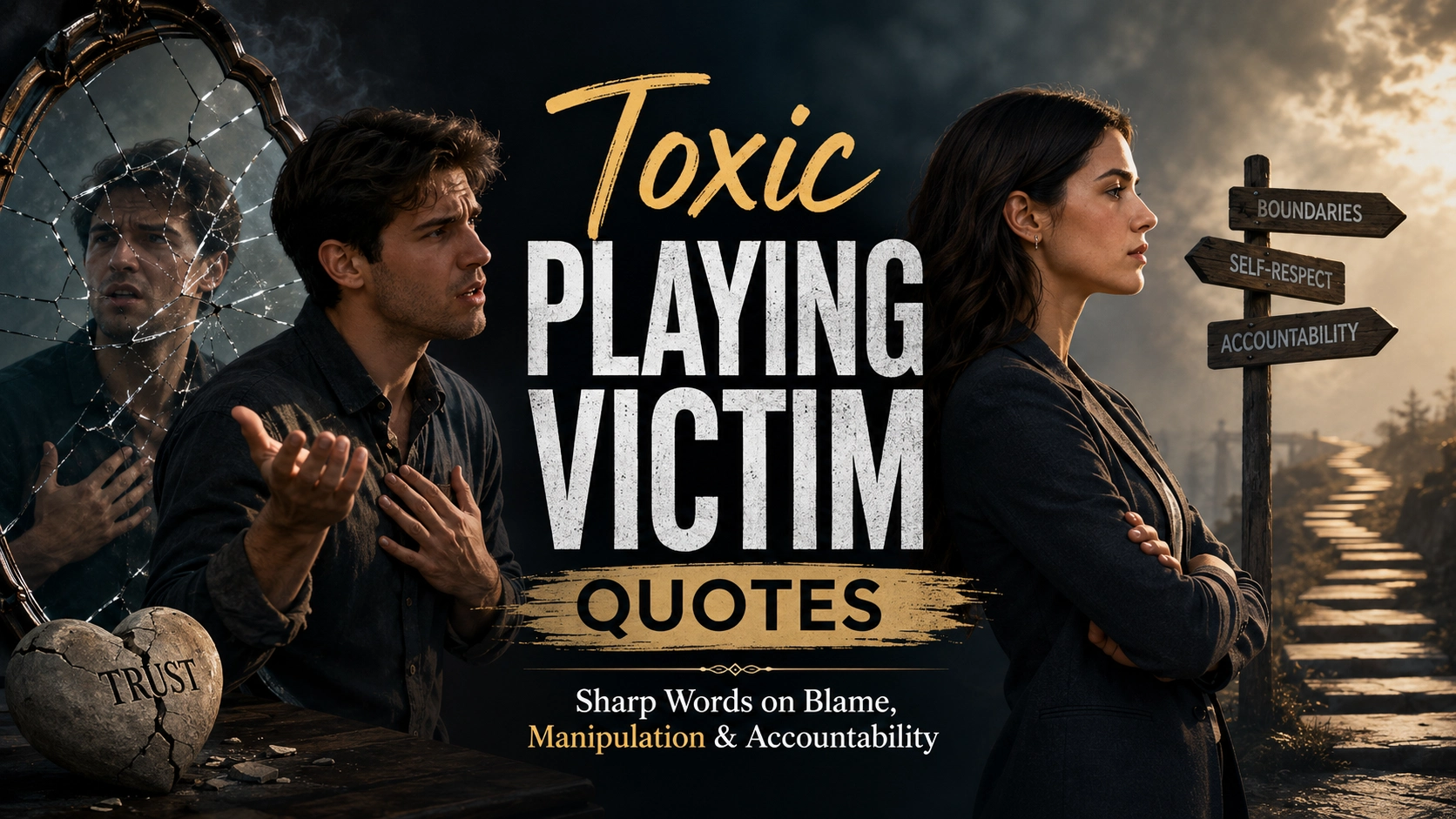
When Victimhood Becomes Toxic
Some people can create the problem, light the match, watch everything catch fire—and then somehow arrive wearing the victim costume.
These Toxic Playing Victim Quotes capture that frustrating mix of blame-shifting, fake innocence, emotional manipulation, self-pity, and refusal to take responsibility. They are written to be shareable, screenshot-worthy, and relatable, with plenty of sharp humor for modern social media.
But there is an important distinction: being genuinely hurt is not the same as manipulating people through victimhood. The best quotes expose the pattern without treating every person who struggles as “fake.”
Toxic Playing Victim Quotes
Sometimes the most frustrating person in the room is the one who caused the problem but somehow became its main character. These quotes are for those moments when accountability mysteriously disappears.
- “Playing the victim does not erase the part you played in the disaster.”
- “Some people rewrite the story until their consequences look like someone else’s cruelty.”
- “A victim card should never become a lifetime exemption from accountability.”
- “You can explain your pain without using it to excuse your behavior.”
- “Playing innocent after causing damage does not make the damage disappear.”
- “Some people want sympathy more than they want self-awareness.”
- “A sad story does not automatically make someone the hero.”
- “When accountability knocks, some people suddenly become victims.”
- “Blame is often easier than admitting, ‘I messed up.’”
- “Playing the victim may win sympathy, but accountability builds character.”
- “Some people turn every consequence into persecution.”
- “Pain deserves compassion; manipulation deserves boundaries.”
- “Not every accusation is an attack, and not every defense is innocence.”
- “You can be hurt and still be responsible for hurting someone else.”
- “The victim role becomes toxic when it is used to escape every uncomfortable truth.”
Short Toxic Playing Victim Quotes
Need something quick enough for a caption, status, or screenshot? These short lines deliver the message without needing an entire paragraph.
- “Victimhood is not accountability.”
- “Sympathy is not innocence.”
- “Own your part.”
- “Blame changes nothing.”
- “Truth needs no performance.”
- “Accountability is not an attack.”
- “Pain is real; excuses are optional.”
- “Stop rewriting the story.”
- “Self-pity is not self-awareness.”
- “Growth begins where excuses end.”
- “Drama is not evidence.”
- “Own what you caused.”
- “Not every consequence is persecution.”
- “Boundaries are not cruelty.”
- “Responsibility beats excuses.”
Deep Playing Victim Quotes
Behind the jokes is a serious idea: repeatedly seeing yourself as powerless can keep you trapped in the same cycle. These deeper quotes focus on responsibility, healing, and recognizing patterns.
- “The deepest trap of victimhood is believing your pain makes change impossible.”
- “When every chapter ends with everyone else as the villain, examine the narrator.”
- “You cannot change every person who hurt you, but you can change what their actions control.”
- “The past can explain your wounds without becoming the author of your future.”
- “You can acknowledge injustice without surrendering your power.”
- “Healing begins when your pain becomes information instead of your entire identity.”
- “Self-awareness asks questions that self-pity avoids.”
- “Your wounds deserve compassion, but your choices still deserve accountability.”
- “Growth begins when blaming the past stops being the only plan for the future.”
- “You do not have to deny what happened to decide what happens next.”
- “A painful history deserves understanding, not unlimited permission to hurt others.”
- “The strongest person in the story is not always the loudest victim.”
- “You regain power when you stop handing every decision to the person who hurt you.”
- “Pain can explain a reaction without making every reaction acceptable.”
- “You are allowed to be wounded without building your entire identity around the wound.”
Quotes About People Who Always Blame Others
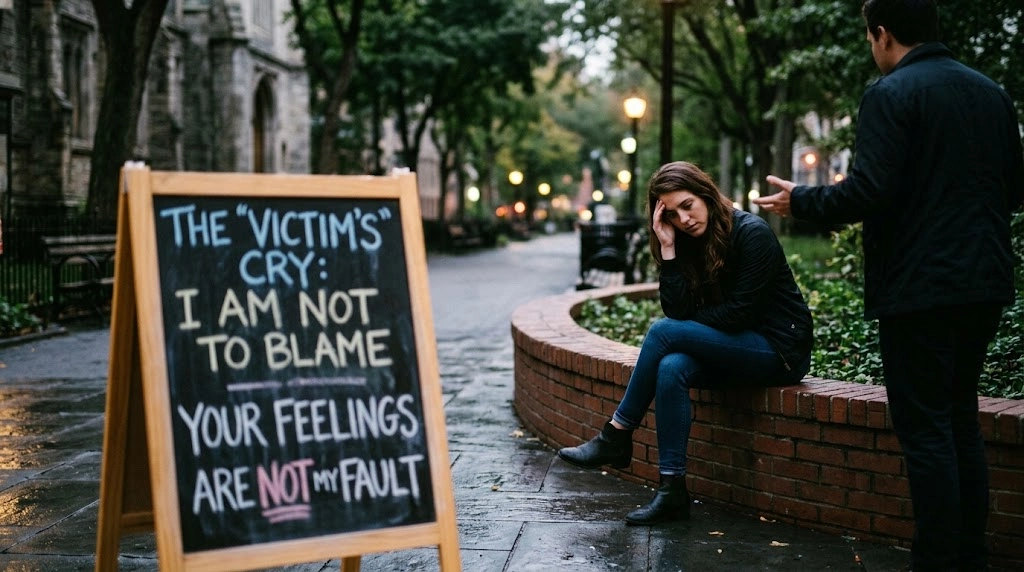
When every disagreement somehow becomes your fault, the relationship can feel like a Courtroom where the verdict was written before the trial. These quotes are perfect for that exhausting pattern.
- “Some people never run out of reasons why everyone else is responsible.”
- “If everyone around you is always the problem, self-reflection may be overdue.”
- “Blaming everyone else protects your pride while starving your growth.”
- “A person who never examines their behavior keeps meeting the same problem in different people.”
- “Responsibility begins where finger-pointing ends.”
- “Some people collect excuses instead of lessons.”
- “Blame can protect your ego today and cost you peace tomorrow.”
- “The easiest sentence is ‘They did this to me.’ The harder one is ‘What was my part?’”
- “If your story has a villain in every chapter, check the narrator.”
- “Some people treat accountability like a personal insult.”
- “Blaming others is easy when self-reflection feels expensive.”
- “You cannot solve a problem while insisting you never contributed to it.”
- “People who refuse responsibility often become experts at changing the subject.”
- “The finger pointing outward can hide three fingers pointing back.”
- “A life built entirely on blame leaves very little room for growth.”
Toxic Accountability Quotes
Accountability does not mean accepting blame for everything. It means having enough maturity to recognize your own behavior and correct it when necessary.
- “Accountability is simply honesty with your own reflection.”
- “A real apology does not need a courtroom defense.”
- “If every apology ends with ‘but you made me,’ the apology is unfinished.”
- “Maturity sounds like, ‘I was wrong, and I will do better.’”
- “An explanation gives context; an excuse avoids responsibility.”
- “You cannot repair damage while arguing about who deserves the blame.”
- “Accountability hurts the ego before it helps the character.”
- “The person who can admit fault has already taken the first step toward growth.”
- “Being confronted does not make you a victim.”
- “A mature person corrects mistakes instead of protecting an image.”
- “Responsibility is uncomfortable, but repeated denial is exhausting.”
- “You do not lose dignity by admitting you were wrong.”
- “Accountability is not punishment; sometimes it is the beginning of change.”
- “The strongest apology is followed by different behavior.”
- “Growth begins when defending yourself becomes less important than telling the truth.”
Victim Card Quotes
The “victim card” is often used online to describe a sudden shift from accountability to sympathy. These lines give that idea a modern, slightly sarcastic twist.
- “The victim card has been played so often it deserves its own membership.”
- “Some people keep the victim card closer than their phone.”
- “When consequences arrive, the victim card magically appears.”
- “The victim card is not a universal skip button for accountability.”
- “Playing the victim does not change the scoreboard.”
- “Some people reach for sympathy the second responsibility enters the room.”
- “The victim card cannot delete the receipts.”
- “Changing your role in the story does not change what happened.”
- “Some people treat accountability like a game of Uno and throw the victim card every time.”
- “The victim card works best when nobody remembers yesterday.”
- “Sympathy may soften a moment, but it cannot rewrite facts.”
- “A victim card is not a character certificate.”
- “Some people pull the victim card faster than they pull up their own receipts.”
- “When the evidence gets uncomfortable, suddenly the plot becomes emotional.”
- “The victim card may change the conversation, but it cannot change reality.”
Manipulative Playing Victim Quotes
Victim-playing can become especially unhealthy when suffering is repeatedly used to create guilt, gain attention, avoid responsibility, or control another person’s reaction. Psychology Today highlights attention-seeking, guilt-inducing behavior, and accountability avoidance as important patterns to watch for. (Psychology Today)
- “Manipulation becomes powerful when sympathy is turned into a weapon.”
- “Some people do not want resolution; they want you guilty.”
- “When vulnerability becomes a control tactic, compassion needs boundaries.”
- “A manipulator can turn your kindness into evidence against you.”
- “Guilt is often the bridge between their story and your silence.”
- “Some people change the question from ‘What did I do?’ to ‘How could you hurt me?’”
- “If every boundary makes you the villain, examine the relationship.”
- “Some people tell their pain loudly so nobody asks about the pain they caused.”
- “Empathy without boundaries can become an invitation to manipulation.”
- “A sad story can be sincere, strategic, or both.”
- “Manipulation often begins when sympathy becomes an obligation.”
- “You can understand someone’s pain without surrendering your reality.”
- “Not every emotional reaction deserves control over your decision.”
- “When guilt becomes the price of saying no, something is wrong.”
- “Healthy compassion listens; unhealthy manipulation demands.”

Savage Playing Victim Quotes
For readers who want a little more attitude, these are sharp enough for social captions without becoming unnecessarily cruel.
- “You could win an Oscar for the story you tell after causing the drama.”
- “Congratulations on turning your consequences into someone else’s fault.”
- “You created the storm and somehow filed a complaint about the weather.”
- “Your tears may be real, but they do not automatically make your story complete.”
- “You changed the narrative faster than the facts could catch up.”
- “Some people make mistakes and then make everyone else apologize for noticing.”
- “Being offended by accountability does not make accountability wrong.”
- “You can tell your version; I can remember mine.”
- “Some people do not want peace—they want an audience.”
- “If excuses were achievements, some people would have trophies.”
- “You cannot manufacture innocence with enough dramatic pauses.”
- “Your victim storyline needs fewer plot twists and more accountability.”
- “The problem with rewriting history is that screenshots exist.”
- “Some people treat consequences like personal attacks.”
- “You are not the villain just because you finally stopped accepting the blame.”
Fake Victim Quotes
“Fake Victim” can be an overly simplistic label because someone can be genuinely hurt while also behaving badly. It is healthier to focus on patterns and actions rather than pretending you can read another person’s mind.
- “A convincing story is not necessarily the complete story.”
- “Someone can feel hurt and still be responsible for causing hurt.”
- “Emotional intensity is not the same thing as factual accuracy.”
- “Watch patterns, not just tears.”
- “A sad expression cannot erase a harmful action.”
- “You do not need to prove someone is fake to recognize unhealthy behavior.”
- “Feelings can be genuine while the story remains incomplete.”
- “False innocence often depends on everyone forgetting what happened first.”
- “Some people tell the truth about their feelings while hiding the truth about their actions.”
- “Innocence does not require a performance.”
- “The truth can survive questions.”
- “Manipulation often becomes obvious when boundaries enter the conversation.”
- “A person can be wounded and still be wrong.”
- “Being hurt does not make every accusation accurate.”
- “Look for consistency between words, actions, and accountability.”
Toxic Relationship Playing Victim Quotes
Relationships become exhausting when every disagreement turns into a competition over who suffered more. These quotes fit friendships, dating relationships, marriages, and family dynamics.
- “A relationship cannot heal when accountability is always one-sided.”
- “Healthy love makes room for two people’s feelings.”
- “Love does not require you to apologize for having boundaries.”
- “If every disagreement ends with you comforting the person who hurt you, notice the pattern.”
- “A healthy partner can hear your pain without immediately replacing it with theirs.”
- “Conflict should create understanding, not an endless victim competition.”
- “You can love someone without carrying responsibility for their choices.”
- “Peace is not peace when silence is the admission price.”
- “A relationship becomes exhausting when one person is always wrong and the other is always wounded.”
- “Mutual accountability is healthier than permanent blame.”
- “You should not have to disappear emotionally to keep someone comfortable.”
- “Love without boundaries can become emotional exhaustion.”
- “A relationship needs two listeners, not one permanent narrator.”
- “You cannot build trust on selective versions of the truth.”
- “Sometimes protecting the relationship means protecting yourself too.”
Funny Playing Victim Quotes
This is where Humor, meme culture, and internet-style one-liners can make the article more shareable. The goal is playful sarcasm rather than cruelty.
- “Some people could lose an argument with a houseplant and blame the plant.”
- “They created the drama, bought popcorn, and complained about the movie.”
- “Their favorite role is victim, and somehow they always know the script.”
- “Some people turn accountability into a five-alarm emergency.”
- “If excuses burned calories, they would never need a gym.”
- “They brought the drama and forgot to check who ordered it.”
- “Every consequence comes with the same plot twist: apparently, it was your fault.”
- “Some people deserve a trophy for surviving problems they personally created.”
- “Their accountability strategy is changing the subject at record speed.”
- “If blame were currency, they would be financially independent.”
- “They could start an argument with themselves and still pick a side.”
- “Their emotional support animal is apparently a permanent excuse.”
- “Some people treat facts like optional subtitles.”
- “The drama department called; they want their lead actor back.”
- “When accountability walks in, suddenly everyone needs a commercial break.”
Victim Mentality Quotes for Self-Awareness
Not every victim mindset comes from deliberate manipulation. Healthline describes it as a pattern that can involve believing bad things will keep happening, others are responsible, and attempts to change will fail; it also notes links with trauma and betrayal. (Healthline)
- “Self-awareness begins when blame stops being your only explanation.”
- “You cannot control everything that happened, but you can examine what happens next.”
- “Your past deserves compassion, not permanent control over your future.”
- “Healing is not pretending you were never hurt.”
- “The goal is not to blame yourself for everything; it is to own what belongs to you.”
- “Growth does not deny injustice; it refuses to surrender agency.”
- “You can comfort your past self while challenging your present habits.”
- “Ask not only who hurt you, but what you want to become afterward.”
- “Responsibility is not self-hatred; it is recognizing your ability to choose.”
- “Your wound can be part of your story without becoming your entire identity.”
- “You are more than the worst thing someone did to you.”
- “Power returns when helplessness stops being your only identity.”
- “A painful past deserves understanding and a purposeful future.”
- “Healing asks you to remember without remaining trapped.”
- “Sometimes the bravest sentence is, ‘I can change my part.’”
Quotes About Being Hurt Then Blamed for Reacting
One especially relatable situation is when someone hurts you and then makes your reaction the only topic. These quotes separate Responding Imperfectly from pretending the original behavior never happened.
- “They hurt you, then made your reaction the entire story.”
- “A bad reaction does not automatically make the original harm acceptable.”
- “Someone can criticize your response without erasing what caused it.”
- “You can regret how you reacted and still stand by your boundary.”
- “Anger does not automatically make the angry person the aggressor.”
- “Your reaction deserves reflection; their behavior deserves accountability too.”
- “Two truths can exist: you reacted poorly and you were genuinely hurt.”
- “Do not accept responsibility for pain you did not cause.”
- “Being emotional does not make your experience imaginary.”
- “A loud reaction does not erase a quiet wrongdoing.”
- “Your response can be imperfect without becoming the whole story.”
- “Sometimes people focus on your reaction because their behavior is harder to defend.”
- “You can apologize for your words without apologizing for having boundaries.”
- “Your emotions are worth examining, but they are not proof that you caused everything.”
- “Healthy accountability looks at the beginning of the conflict, not just its loudest moment.”
One-Line Playing Victim Quotes for Captions
These are designed for Instagram captions, Facebook statuses, Pinterest graphics, TikTok captions, and screenshots.
- “Not every sad story has an innocent narrator.”
- “I stopped arguing with rewritten history.”
- “Accountability is not disrespect.”
- “Your victim story cannot control my boundaries.”
- “I know what happened, even if you changed the story.”
- “Sympathy does not erase responsibility.”
- “I refuse to carry blame that is not mine.”
- “The truth does not need a performance.”
- “Protect your peace from manufactured guilt.”
- “No more defending myself against someone else’s version of events.”
- “I can understand you without agreeing with you.”
- “Your pain matters, and so does mine.”
- “Boundaries are not cruelty.”
- “I choose clarity over guilt.”
- “The pattern became obvious when I stopped explaining myself.”
Why These Quotes Work
The strongest quotes in this topic usually combine recognition + emotional tension + a memorable twist.
For example:
“You created the storm and somehow filed a complaint about the weather.”
works because the reader instantly understands the metaphor.
A good social-media quote usually does at least one of these things:
- captures a recognizable behavior
- creates an emotional reaction
- contains a surprising comparison
- sounds natural when shared
- is short enough to screenshot
- gives readers language for something they struggled to explain
That is why the article deliberately mixes serious observations, savage lines, relationship quotes, short captions, and humor instead of presenting 225 versions of the same sentence.
Genuine Victim vs. Playing the Victim
This distinction should remain visible in the article because it adds genuine information value.
Psychology Today notes that someone who is genuinely opening up generally wants understanding, can receive empathy or feedback, and can show vulnerability. Manipulative victim-playing may instead involve attention-seeking, inducing guilt, or using past hardship to avoid accountability.
| Genuine struggle | Unhealthy recurring pattern |
| Wants understanding | May demand constant sympathy |
| Can discuss feelings | May redirect everything toward blame |
| Can receive empathy | May use empathy as leverage |
| Can consider solutions | May reject every solution |
| Can acknowledge complexity | May make everyone else responsible |
| Can be vulnerable | May use vulnerability to avoid accountability |
These are patterns, not diagnostic tests. A person can genuinely experience harm and still develop unhealthy coping patterns. Psychology Today notes that repeated painful experiences can contribute to learned helplessness and a victim role.
How to Respond to Someone Who Always Plays the Victim
Instead of trying to “win” the conversation, keep it specific.
Try:
- “I understand that you’re upset, but I don’t agree with your version of events.”
- “I’m willing to discuss my part, but not accept responsibility for everything.”
- “Let’s stay with the original issue.”
- “What do you think your responsibility was?”
- “I can listen to your feelings without agreeing with your accusation.”
- “I’m not comfortable continuing this conversation if I’m being insulted.”
- “We can talk when we’re both ready to discuss the issue calmly.”
The goal is clarity, not revenge.
Where to Use These Quotes
| Situation | Best style |
| Instagram caption | One-line |
| Facebook status | Savage or relatable |
| Pinterest graphic | Deep |
| TikTok caption | Short or funny |
| Friend conflict | Direct |
| Relationship issue | Emotional |
| Meme | Funny |
| Personal journal | Self-awareness |
| Boundary-setting | Accountability |
| Conversation starter | Deep |
People Also Ask
“When every chapter ends with everyone else as the villain, it may be time to examine the narrator.”
“Some people make mistakes and then make everyone else apologize for noticing.”
Try: “I’m willing to discuss what I did wrong, but I’m not going to accept responsibility for things I didn’t do.”
Being a victim means experiencing genuine harm or wrongdoing. “Playing the victim” generally refers to a recurring pattern of presenting oneself as powerless or blameless, particularly when that role is used to avoid responsibility or influence others.
The distinction should be handled carefully because genuine trauma can contribute to feelings of helplessness and a recurring victim role.
There is no single explanation. Possible factors include past trauma, betrayal, learned helplessness, low self-esteem, fear of criticism, difficulty accepting responsibility, or a learned interpersonal pattern.
Conclusion
The best toxic playing victim quotes do more than call someone out.
They give people words for a confusing experience: being blamed by someone who refuses to examine their own behavior.
The smartest approach, however, is not to label everyone who expresses Pain As Toxic. Real suffering deserves empathy. The problem begins when victimhood becomes a repeated tool for blame, guilt, control, or escaping accountability.
So save the savage lines for the right moment, share the funny ones with someone who gets the joke, and keep the deeper ones for when you need clarity.
Because sometimes protecting your peace is not about proving someone else wrong.
It is about finally refusing to carry blame that was never yours.